-
5,220 metres
-
Ibague (or Anzoategui)
-
4x4 vehicle
-
Hostel, Farmhouse, Camp
-
Year round
-
English, Spanish
-
National Parks Included
-
All meals during the expedition
-
Personalized
-
16
-
69
Overview
Summit one of Colombia’s last tropical glaciers through a remote Andean route.
Embarking on a Thrilling 4-Day Trek to Nevado Tolima Volcano: Discover the Majesty of Tropical Glaciers and witness firsthand the effects of climate change while learning about delicate ecosystems and vital conservation efforts. Feel the exhilarating chill of mountain air as you conquer breathtaking peaks, listening to the whisper of the wind through the páramo, a unique Andean moorland.
After the climb, rejuvenate in natural hot springs, surrounded by thousands of sponge-like frailejones plants, and connect with friendly local campesinos and arrieros (resilient inhabitants of these rugged landscapes), sharing stories and laughs that make this Colombian Andes trekking adventure truly unforgettable.
Highlights
- Summit one of Colombia’s last tropical glaciers
- Better acclimatization. Higher summit success. Remote Andean route
- Immerse yourself in the campesino way of life
- Recover in natural hot springs at Termales del Cañón
Itinerary
Meet in Ibagué and begin the journey into the mountains with a 4x4 transfer to Palomar, in the municipality of Anzoátegui (approx. 4 hours). As the road climbs, the landscape shifts from city and valley into rural Andean terrain, offering a first glimpse into the heart of the Andes.
This day is focused on approaching Los Nevados National Park while gaining altitude. Upon arrival at the hostel in Palomar, settle in and meet your guide and team.
In the evening, an expedition briefing will cover the route, expected conditions, and key safety considerations. This first night also allows your body to begin acclimatizing to the altitude before the trek even starts.
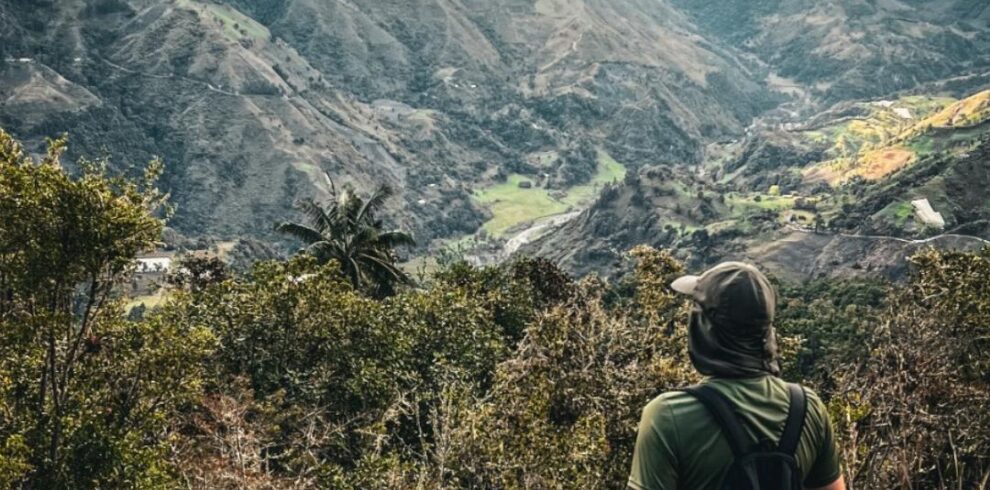
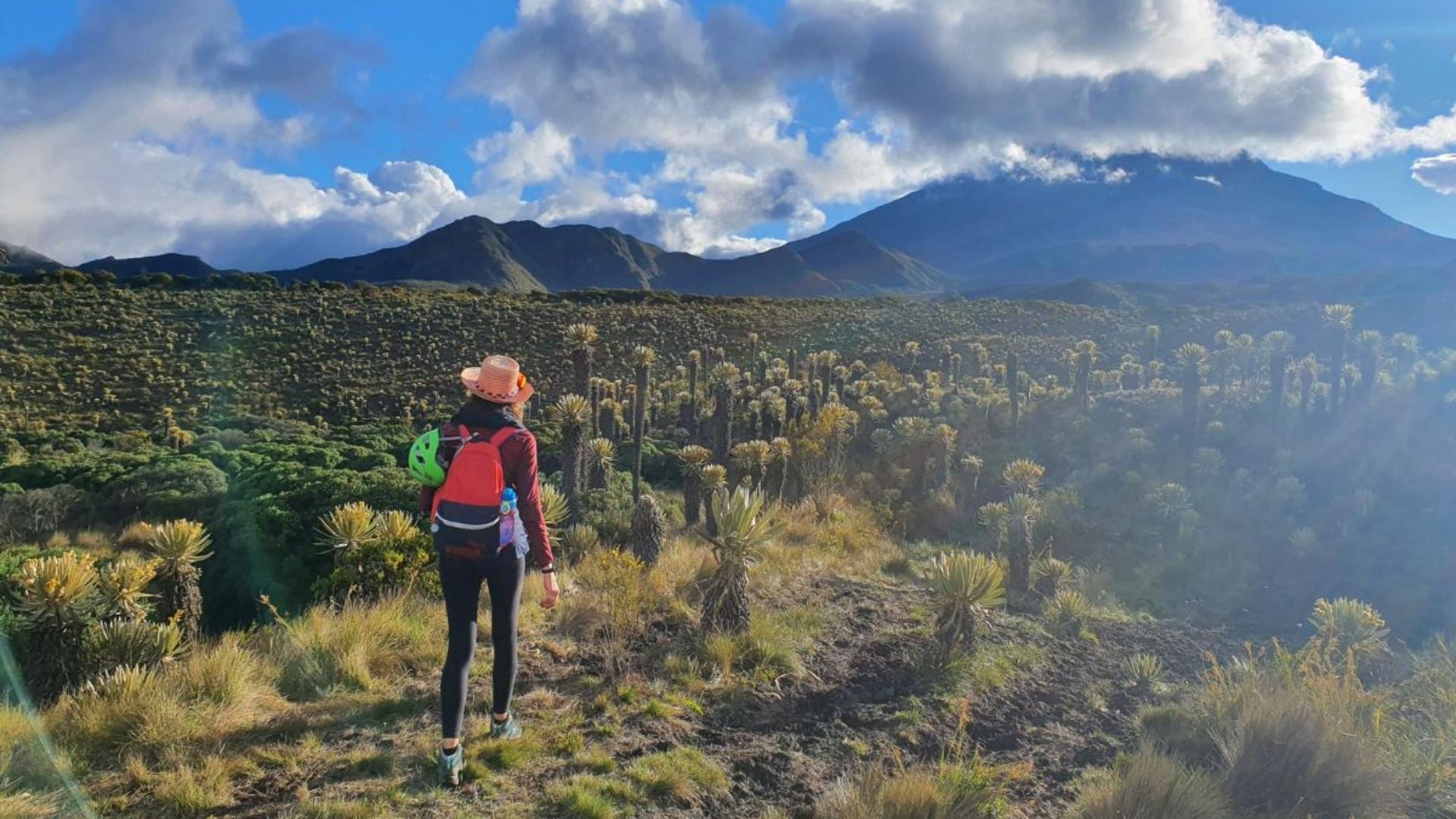
Start the day with a hearty breakfast and mountain views before a 40-minute 4x4 transfer to La Punta, the starting point of the trek. From here, begin hiking into the páramo, a unique high-altitude ecosystem characterized by open landscapes and endemic flora.
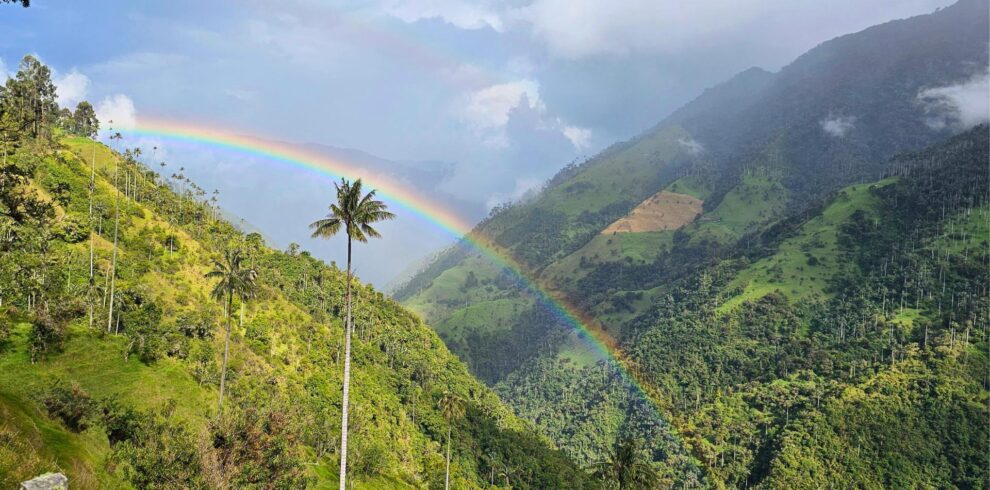
The trail passes through fields of iconic frailejones, with views over the surrounding valleys. Along the way, you’ll pass the picturesque Laguna de la Bombona and catch a distant view of the El Salto waterfall.
Arrive at Casa del Oso (Vancouver), where you’ll spend the night in a cosy and traditional farmhouse, offering a simple but authentic mountain experience.
Begin the day with a traditional campesino breakfast, cooked over a wood stove by Doña Marta. From here, continue the ascent deeper into the mountains, following trails that gradually lead you into higher-altitude terrain.
Hike towards Termales del Cañón (hot springs) for a brief stop and a traditional packed lunch, before continuing to Campamento Arenales, your high-altitude campsite for the night.
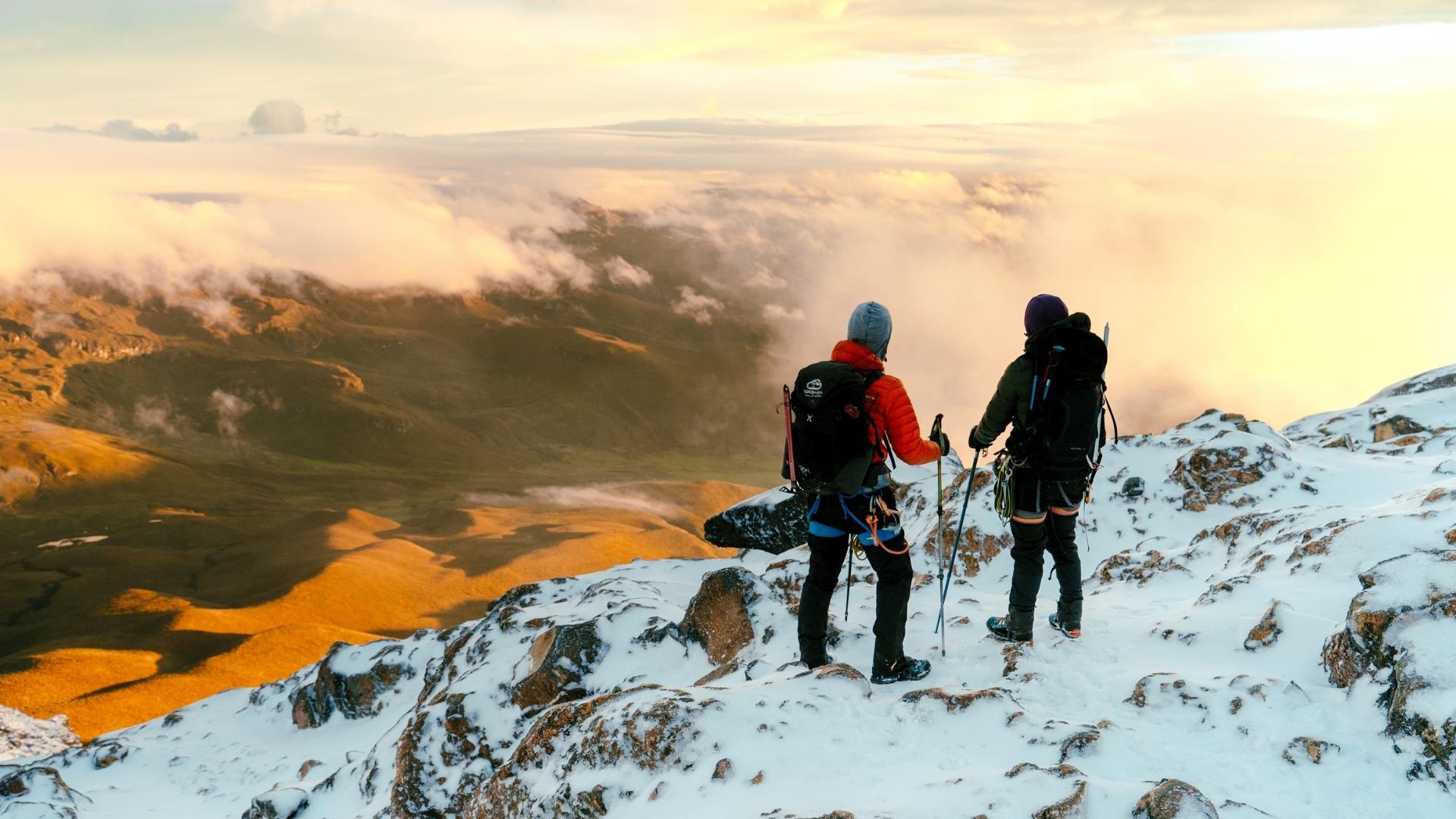
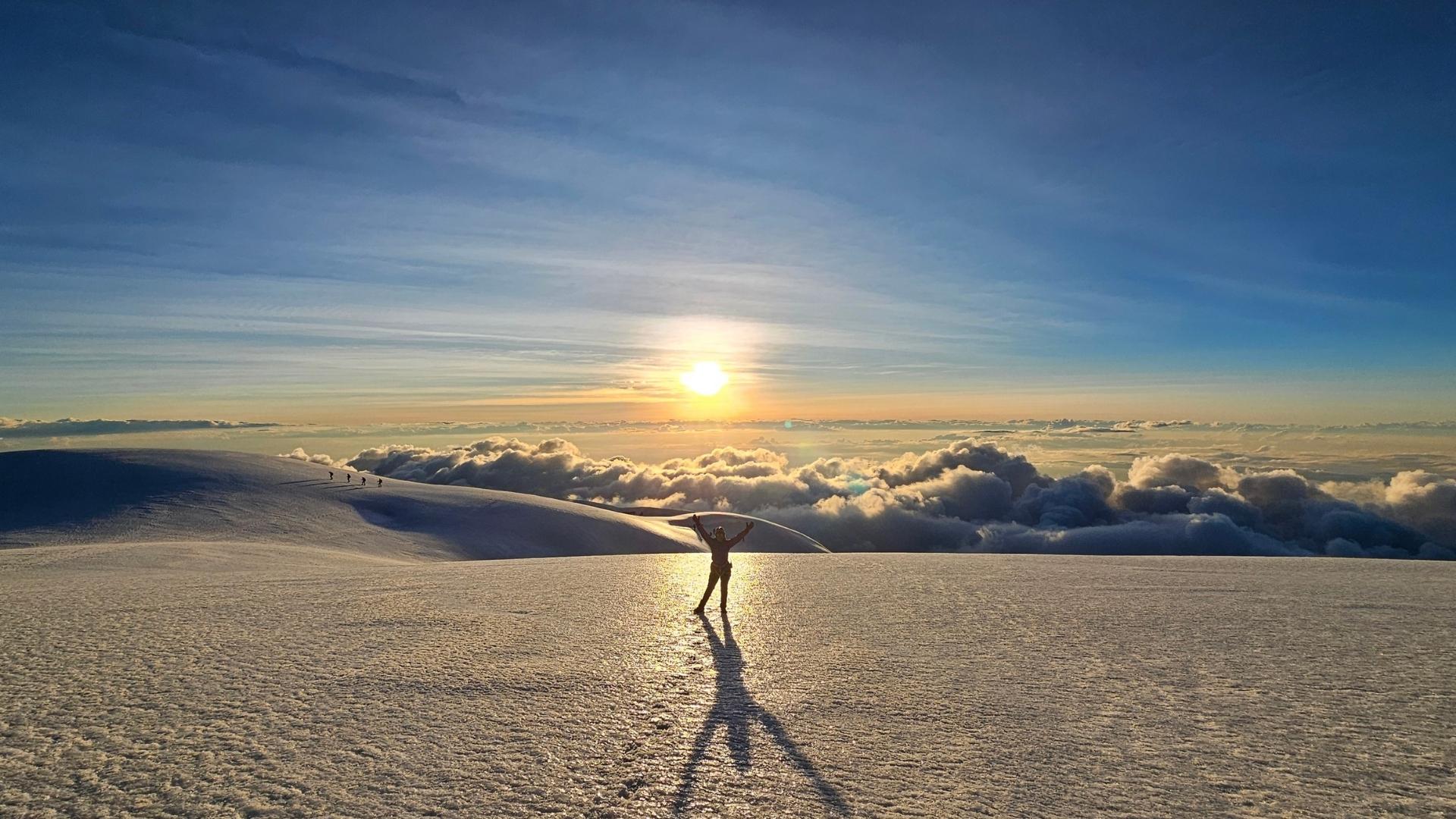
With some luck, enjoy a breathtaking sunset above the clouds as the landscape opens up and transitions into glacial moraine terrain.
Depart well before dawn with headlamps, beginning the ascent toward the glacier under the night sky. The route crosses steep volcanic sand slopes, rocky sections, and glaciated terrain, requiring focus and steady pacing in high-altitude conditions.
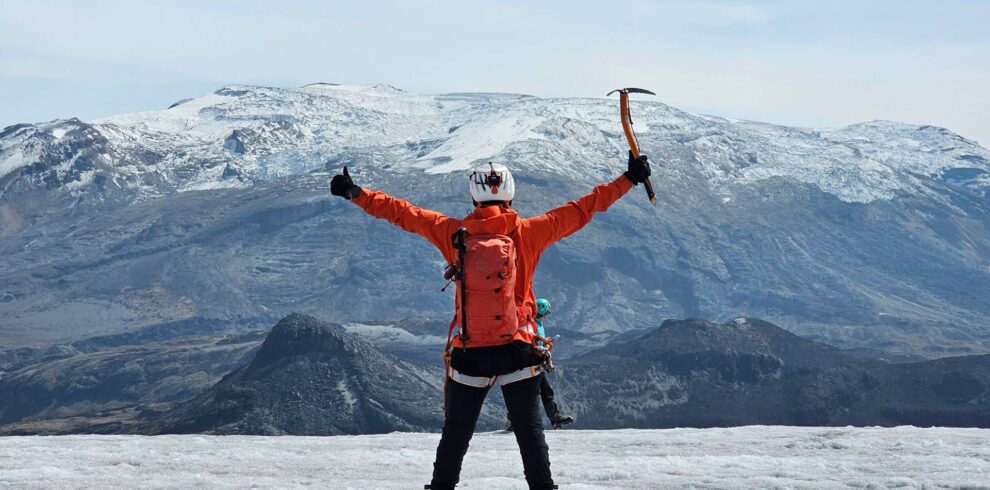
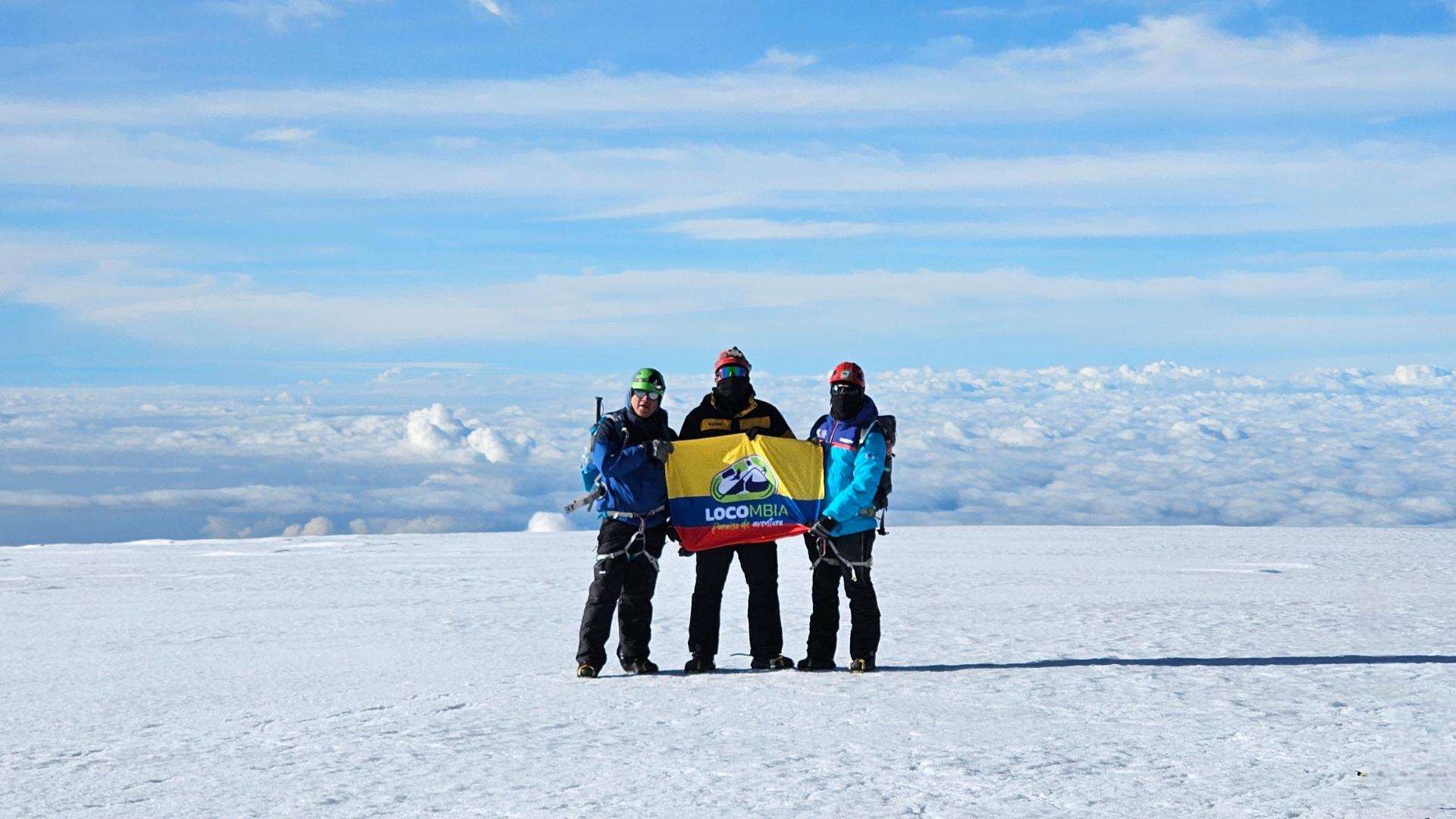
If weather and conditions allow, reach the summit at sunrise, with expansive views across Los Nevados National Natural Park. On clear days, peaks such as Nevado del Ruiz, Santa Isabel, El Cisne, and Paramillo del Quindío can be seen on the horizon.
After the summit, descend back to camp for a short rest before continuing down the mountain to Termales del Cañón (hot springs), where you can recover after the climb. Depending on the group’s pace and conditions, the day concludes either with an overnight stay by the hot springs (camp) or a continued trek back to Casa del Oso farmhouse.
After the effort of the previous days, begin the return journey, following the trail as it gradually descends through the páramo.
The route retraces sections of the approach, offering a different perspective of the landscape, with time to take in the surroundings at a more relaxed pace.
Arrive back at "La Punta" trailhead, where your 4x4 transfer will be waiting to take you back to civilization. The expedition concludes in Ibagué.
Includes
What’s Included
- Pre-Expedition Guidance: Online Q&A sessions, plus personalized advice to help you prepare for the challenge.
- National Park Entry: Reservation and entry permit to Los Nevados National Natural Park.
- Professional Guide: Experienced expedition guide specialized in mountaineering, wilderness first aid, and environmental interpretation (fully licensed). Bilingual available.
- Mini Mountaineering Course: Learn essential trekking and glacier techniques, along with environmental education throughout the expedition.
- Technical & Camping Gear: Helmet, harness, rope, ice axe, crampons, plus tent, sleeping bag, sleeping mat, and trekking poles.
- Meals: Full board during the expedition, plus eco-snacks.
- Accommodation: 4 nights (hostel, traditional farmhouse, and mountain camps).
- Hot Springs: Access to the natural thermal baths at Termales del Cañón.
- Mule Support: Transport of luggage and equipment (max 15kg per person) from La Punta to Termales del Cañón (round-trip).
- Insurance: Comprehensive travel insurance (Colasistencia – PNN approved).
- 4x4 Transfers: Round-trip transport from Ibagué to the trailhead (La Punta).
- Memories: Expedition photos and a souvenir.
Add-Ons & Optional Services
- Personal Porter (Highly recommended): Hire a porter to carry your gear between Termales del Cañón and Campamento Arenales. Benefit from a lighter trek, better rest, and improved acclimatization — increasing your chances of reaching the summit. Porter fees go directly to local porters, supporting their work and families. Cost: $300.000 COP (round trip / 15kg each way) — including technical gear, camp equipment, food and water. Extra weight: $10,000 COP per additional kg (each way). 👉 Check out the expedition FAQ's section for more info.
- Additional LOCOMBIA Experiences: Extend your trip with a coffee tour, acclimatization hike, and more before or after your expedition — or take it further and explore Colombia’s more remote regions, such as Guainía and beyond. 👉 Explore all our Experiences & Destinations
- Accommodation (Before & After): Recommended places to stay in Ibagué before and after your expedition. 👉 Check out the expedition FAQ's section for more info.
- Private Transfers: Transport from the location of your choice to Ibagué, or straight to Anzoátegui (enquire to check availability).
- Medical Consultation: For added peace of mind, consult with one of our specialist doctors before your expedition. We work with professionals in mountain medicine, sports medicine, and travel health to assess your readiness for high-altitude and remote environments.
Price & FAQs
Price depends on group size
Starting at COP 2.500.000 2.200.000
For safety and quality, we maintain a low guide-to-client ratio. Typically, one guide is assigned for every 3 participants. As group size increases, an additional guide may be required, which can slightly affect the per-person price.
You can choose to book a private expedition on your preferred dates, or join a scheduled group departure. See calendar.
Final Pricing (per person)
Group Size | Price (COP) | Notes
1 person $0.000.00 Private expedition
2 people $0.000.00 Private expedition
3 people $2.200.000 Best value ⭐
4 people $0.000.000 Guide x 2
5+ people On request Bespoke
Book your spot with just a 30% deposit | Secure international card payments accepted
Plan Your Expedition on WhatsApp
Limited spots available due to National Parks’ daily capacity restrictions. We recommend booking in advance to secure your preferred dates.
No prior mountaineering or technical climbing experience is required. During the expedition, our guides will provide a basic introduction to glacier travel and the use of technical equipment such as crampons, ice axes, and ropes when necessary.
That said, this is a physically demanding high-altitude expedition and should not be underestimated. Participants should be in good physical condition and comfortable hiking for multiple consecutive days (6–10 hours per day), often with significant elevation gain and changing weather and terrain conditions.
Difficulty Level: 4/5 – Challenging
This expedition is suitable for fit and well-prepared hikers seeking their first high-altitude mountaineering experience, as well as experienced trekkers looking for a rewarding Andean mountaineering challenge.
Don’t worry — we’ve got you covered so you can travel light and avoid complex logistics. We provide all technical equipment, as well as camping gear.
You only need to bring your personal clothing, trekking boots, accessories, toiletries and backpack.
👉 Download the full gear checklist
If you’re missing anything, we can assist with gear rental.
👉 Explore our blog for practical tips, insights, and stories from the field
Summit success depends on many variables, including weather conditions, acclimatization, and individual physical and mental condition. While we can’t guarantee a summit, our expeditions are designed to maximize your chances through proper acclimatization, pacing, logistics, and decision-making in the field.
Based on our experience, the typical summit success rate is around 85%, depending on conditions and participant preparation.
Safety is always the priority. If weather or mountain conditions are not suitable for a safe summit attempt, the guide will make the decision to adjust the plan.
This may include delaying the summit push, modifying the route, or turning back if necessary. While this can be disappointing, these decisions are essential to ensure the safety of the group.
Temperatures at high altitude can drop significantly, especially during summit attempts. Having the correct clothing is essential for your safety and comfort.
As mountain conditions are outside of our control, changes to the itinerary or summit outcome do not qualify for refunds.
At high altitude, it’s normal for some participants to experience fatigue or altitude-related symptoms — even very fit individuals.
For safety reasons, the group typically moves together, especially when there is a single guide. In some cases, a participant may remain at camp with support or descend with assistance, depending on conditions and the team setup.
Our priority is always the safety and wellbeing of each participant, and the plan will be adapted accordingly by the guide. We always aim to give everyone the best possible chance of reaching the summit, and guides will remain flexible when conditions allow — without taking unnecessary risks.
Please note that if a participant is unable to continue and no additional guide, support, or other safe alternative is available, the entire group may be required to descend or return together. This decision will be made solely by the guide based on safety considerations.
If you are joining an open group, it’s important to understand and accept this possibility when planning your expedition. As with any high-altitude expedition, unforeseen situations can occur, and summit outcomes, early returns, or itinerary changes do not qualify for refunds.
Mountain environments come with natural risks, but with the right approach they can be managed safely.
Altitude affects everyone differently, and mild symptoms are common at higher elevations. Our approach is built around prevention first — with carefully designed acclimatization, steady pacing, and constant monitoring throughout the expedition.
All our guides are trained in Wilderness First Response (WFR), CPR/AED, incident command systems, and technical rescue. We actively monitor participants, including the use of pulse oximeters, and respond early to any signs of altitude-related issues. If symptoms appear, we stop, rest, and manage them immediately to prevent progression.
If symptoms worsen, the priority is always to descend to a lower altitude, which is the most effective treatment. In more serious cases, our guides are trained to activate evacuation protocols, and have life saving medication available.
We carry a comprehensive high-altitude medical kit, maintain direct VHF communication with official emergency services (SAGER Tolima), and coordinate in the field via UHF radios with arrieros (mule drivers), porters, and other guides on the mountain. These networks provide critical support in remote terrain.
Evacuation is managed progressively — starting with local support (mules, arrieros, nearby farms), and escalating to coordinated rescue teams if required. In extreme cases, medical evacuation (medevac) can be requested through the Colombian Air Force, although weather and altitude can limit availability.
All expeditions are covered by insurance that includes medical assistance and search and rescue (SAR).
Our goal is simple: to keep you safe, well-supported, and confident throughout the expedition.
A porter is not mandatory, but it is highly recommended.
Carrying less weight allows you to conserve energy, recover better, and improve acclimatization — all of which increase your chances of reaching the summit.
Without a porter, you will need to carry your full pack, including personal gear, part of the expedition equipment, food, and water between Termales del Cañón and Campamento Arenales.
Many participants choose a porter to reduce physical strain and focus more on the experience — especially on this section of the route, where most of the altitude is gained just before the summit push.
For the rest of the route, mules carry your gear, so you only need to hike with a daypack. (Mules are not permitted beyond Termales del Cañón, which is where porter support becomes most valuable).
On the first night in the hostel, you will have access to electricity and Wi-Fi.
At Casa del Oso farmhouse, power is supplied by solar panels. Charging is usually available during the day, but more limited at night depending on battery capacity. The farmhouse also has satellite Wi-Fi, which generally works well but can be affected by weather and energy availability. We encourage leaving a small tip for the farmers if you use the Wi-Fi.
Beyond Casa del Oso, there is no access to charging or internet connection.
Mobile phone signal is lost shortly after leaving town (Anzoategui).
The expedition can run year-round, but conditions vary depending on rainfall.
Historically, the drier seasons (December–March and June–August) tend to offer more stable weather, clearer views, and better chances of a summit. However, in recent years, conditions have become less predictable due to changing climate patterns. The high Andes also have microclimates, which can differ significantly from regional forecasts.
That said, mountain conditions are never guaranteed, and flexibility is key. We monitor conditions closely and can advise on the best dates based on current conditions and our experience in the field.
The Cocora route is the most popular way to approach Nevado del Tolima — but it’s also busier, less authentic, and not optimized for acclimatization.
Our route, starting in Palomar (Anzoátegui), is designed differently. You begin at a higher altitude (3,000m vs 2,000m) and follow a more progressive ascent, giving your body time to adapt before the hardest days. This significantly improves your chances of reaching the summit.
It’s also a quieter, more remote experience, away from the crowds of the commercial route. Instead of a heavily trafficked trail and often crowded mountain refuges, you move through open páramo landscapes and experience unique highlights such as Laguna Bombona, El Salto Waterfall, and natural hot springs — features not found on the Cocora route.
In practical terms, this means:
- Better acclimatization → higher summit success
- Less physical shock → more energy for summit day
- Fewer tourists → a more authentic mountain experience
- More sustainable → supports local communities and reduces pressure on overused trails
If your goal is not just to reach the summit, but to fully experience the mountain along the way, this route offers a clear advantage.
Ibagué is centrally located in the Colombian Andes, making it easily accessible from both Bogotá and the Coffee Region, and within driving distance of major cities like Cali and Medellin (approx. 6–8 hours).
From Bogotá, you can travel to Ibagué by:
- Private transfer (recommended) — around 4 hours door-to-door
- Domestic flight to Perales Airport (IBE) — approx. 20-minute flight
- Bus — regular departures from Bogotá’s main terminal (approx. 5 hours)
If you are coming from the Coffee Region (Armenia, Salento, Pereira, Manizales, etc.), Ibagué can also be reached by:
- Private transfer — approximately 3–5 hours, depending on your location
- Bus — regular departures (travel times vary)
We can assist with arranging private transfers or advise on the best option based on your itinerary.